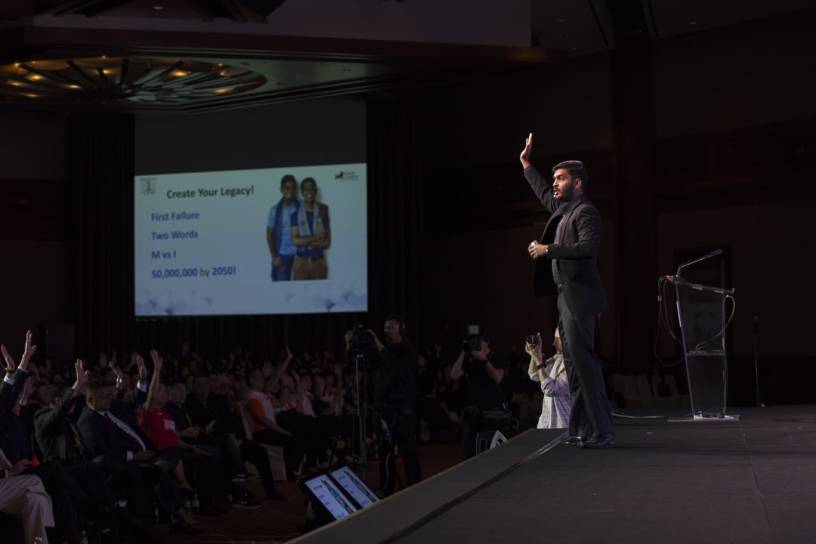
Meet Vicky Vaswani, a marketing genius dedicated to helping service-based business owners in Singapore thrive by leveraging the power of Human-Assisted Artificial Intelligence.
Vicky also positions clients as industry experts through tailored authority content. Using proprietary WhatsApp AI chatbot that automates appointment scheduling 24/7, Vicky empowers businesses to grow efficiently while staying ahead in the competitive digital landscape. He also wants to inspire 50 million people by 2050. Read to find out what he’s up to.
What inspired you to combine human assistance with AI in your approach to generating high-quality leads for service-based businesses?
We started off as a podcast marketing agency, helping service-based business owners brand and position themselves as authorities in the market. Initially, we did their branding very well. Everyone saw them as authorities, but they couldn’t convert that perception into high-quality leads. So, they came to me asking, “Can you help me generate leads as well?”
That’s when I realised that while branding was important, they also needed a solution to generate quality leads. I found a partner who could get them high-quality leads, and we integrated AI with social media platforms to target the right leads.
I also understand you have a proprietaty WhatsApp AI chatbot. How does this differentiate itself from other tools in the market?
For the WhatsApp AI chatbot, I have two types. One is a structured chatbot, which automates conversations while mimicking human behaviour. It’s not based on buttons, which people know are automated; it simulates a conversation. This type works for around 70% of business owners because many Singaporeans prefer structure and directness.
The other type is a hybrid chatbot, which offers more flexibility. Even if the conversation goes off-script (for example, if the lead asks about the weather), the chatbot can steer the conversation back to the lead’s intent. It can be trained to replicate your tone, humour, and style, but it requires more time and effort to train and monitor.
While the structured bot can be set up in as little as 24 hours, the hybrid bot takes about 10 days to set up but improves over time with continuous training. Most people come to us with either one or the other, but we tailor the solution to their business needs, recommending the most suitable option.
What challenges do you face when integrating AI with human touch in your business, and how do you overcome them?
The main challenge isn’t integrating AI with human touch but rather integrating humans into AI. AI can handle much of the heavy lifting, but humans still need a foundational understanding of the process. For example, when using AI tools like ChatGPT, you must understand prompt engineering to get the best results.
This is why there’s a whole industry focused on this—people are even pursuing degrees in prompt engineering. It’s crucial to manage expectations and recognise that AI has limitations. When I work with clients, I remind them that I’m not just offering AI solutions but human-assisted ones. This is why we named our approach “human-assisted artificial intelligence.”
How do you help business owners position themselves as industry experts through authority content, and why is this so important?
We live in two worlds: the online world and the offline world. For service-based businesses—like chiropractors, tuition centers, or air-conditioning services, where the industry is high-touch—having a personal brand is essential.
Without it, standing out, especially in competitive industries like real estate and insurance, becomes challenging. Creating content is key to building that personal brand. However, many business owners struggle with what type of content to create and how to present it. That’s where we come in. We can create six months of social media content in just one hour of a business owner’s time. Our omnichannel marketing strategy positions them as experts across major platforms like Facebook, Instagram, TikTok, YouTube, and LinkedIn.
This is crucial because, before someone meets you in the offline world, they meet you online. People are becoming more skeptical, so it’s not enough to just create influencer content (what you ate, where you went on vacation). To establish yourself as an authority, you need to share educational content. It’s not about showing what you had for lunch, but demonstrating your expertise.
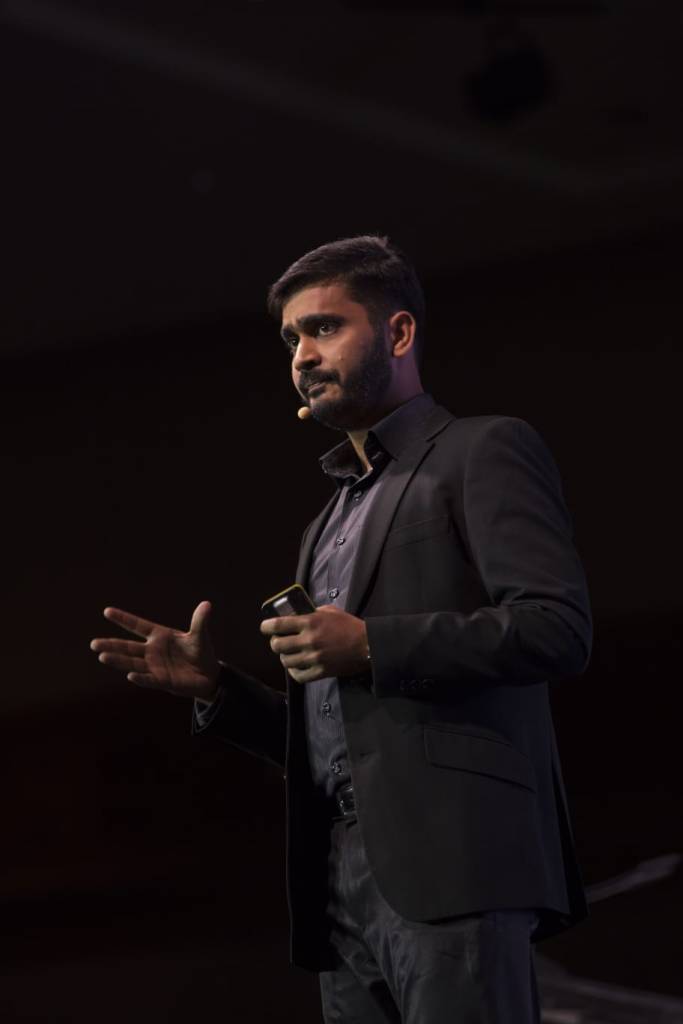
Entrepreneurs who take a different approach are the ones who thrive. If you want to survive in business, you can’t just do what everyone else does. You have to be better than normal.
What impact have your social media ad campaigns had on businesses, and how do you ensure they attract high-intent buyers?
For my business, we’ve seen incredible returns, often 30-40X on ad spend. For our clients, the return is typically 5X to 25X. The key isn’t some magical hack; it’s about a well-oiled system that combines human effectiveness and AI efficiency. We also train business owners on how to handle leads effectively.
Even though AI chatbots handle the initial interaction, human touch is still necessary to build rapport and establish authority. By following this system, results continue to improve.
What key metrics do you track to measure the success of your lead generation and appointment-setting strategies?
Measuring success is essential in marketing. Without measurement, there’s no way to define success. I always tell my clients that marketing should be black or white—either it works, or it doesn’t. You can’t be “half pregnant.”
To measure success, I track three key metrics: 1. Cost per lead: This is the basic metric, but while it’s important, it’s not everything. 2. Cost per appointment: Service-based businesses rely on appointments, and higher-intent leads make a difference. 3. Cost per close: How much does it cost to acquire a new client?
Additionally, it’s important to track the “lifetime value of a customer”. As long as the lifetime value exceeds the cost per close, the business will remain profitable. Many business owners fail to track these metrics, leading them to believe marketing doesn’t work.
How do you see AI evolving in the lead generation space, and what future innovations are you excited about?
AI can help service-based businesses increase the lifetime value of their customers by keeping them engaged and nurturing relationships over time. I’m also excited about using AI to build and nurture communities. This will be a game-changer for businesses in building long-term relationships with their customers.
We’re currently experimenting with AI callers that even have a Singaporean slang. I’m also looking into developing AI solutions for industries like insurance and real estate, where staying top of mind with clients is essential.
I understand you are part of Better Than Normal movement. How does this movement align with your business philosophy and entrepreneurial journey?
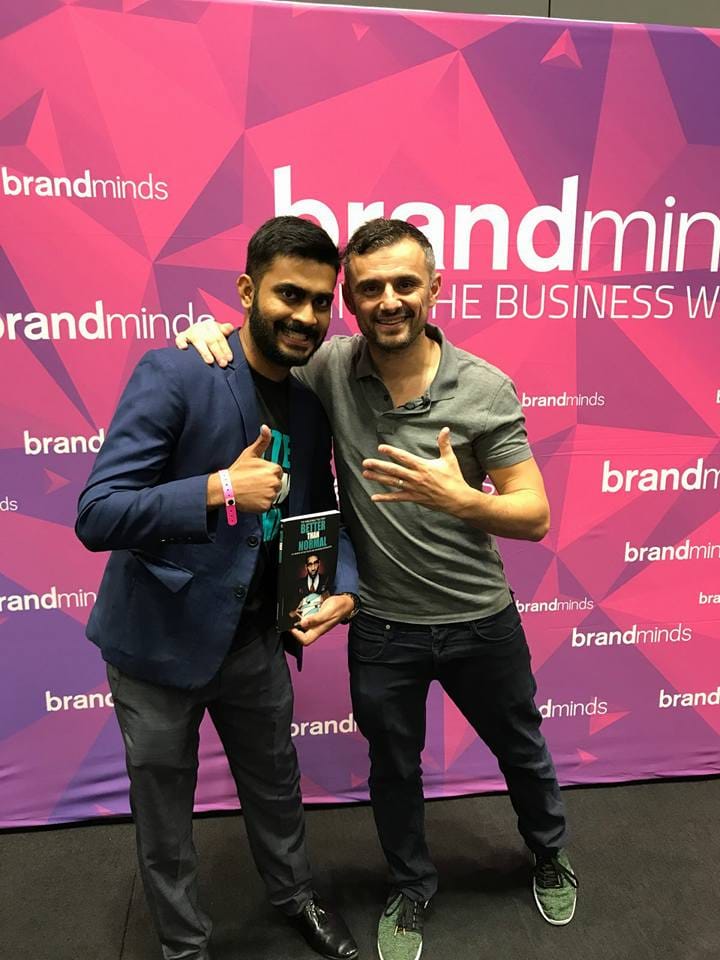
The Better Than Normal movement is a project which I started with my cousin Hitesh. He is born with cerebral palsy which affects his walking and talking. Despite his disadvantages in life, he turned his weakness into his strength. We aim to inspire 50 million people by 2050 to be “better than normal.” This mission aligns perfectly with my business philosophy because in today’s world, being “normal” in business isn’t enough to succeed.
Entrepreneurs who take a different approach are the ones who thrive. If you want to survive in business, you can’t just do what everyone else does. You have to be better than normal. That’s why I believe entrepreneurs will lead the way in spreading this message.
What advice would you give to entrepreneurs looking to leverage AI in their marketing and lead generation efforts?
AI is inevitable—it’s just a matter of time. If you don’t leverage AI, you risk being left behind. My advice is to dive in and try it. Once you experience the power of AI, it will change your perspective on business. As AI becomes more integrated into industries, you’ll see that the government is even offering grants to support AI adoption. So, take advantage of the resources available and don’t hesitate to seek help.
Where do you see yourself and what’s your vision for Singapore in the next five years?
Personally, my vision remains the same: success is going to sleep every night with my heart, mind, body, and soul at peace. For Singapore, with one in four citizens expected to be 65 or older in the next five years, there will be immense opportunities in the health and elderly care sectors.
I also see India as a huge opportunity for expansion. With a large, youthful population, it’s a prime market for Singapore entrepreneurs to explore. The future looks bright, and there are plenty of opportunities for those who are ready to embrace them.
Connect with Vicky: GrowCastShow.com and Instagram.
Also read: Meet Dr Tristan Peh, a Dental Practitioner With 5.6 Million Subscribers on YouTube
