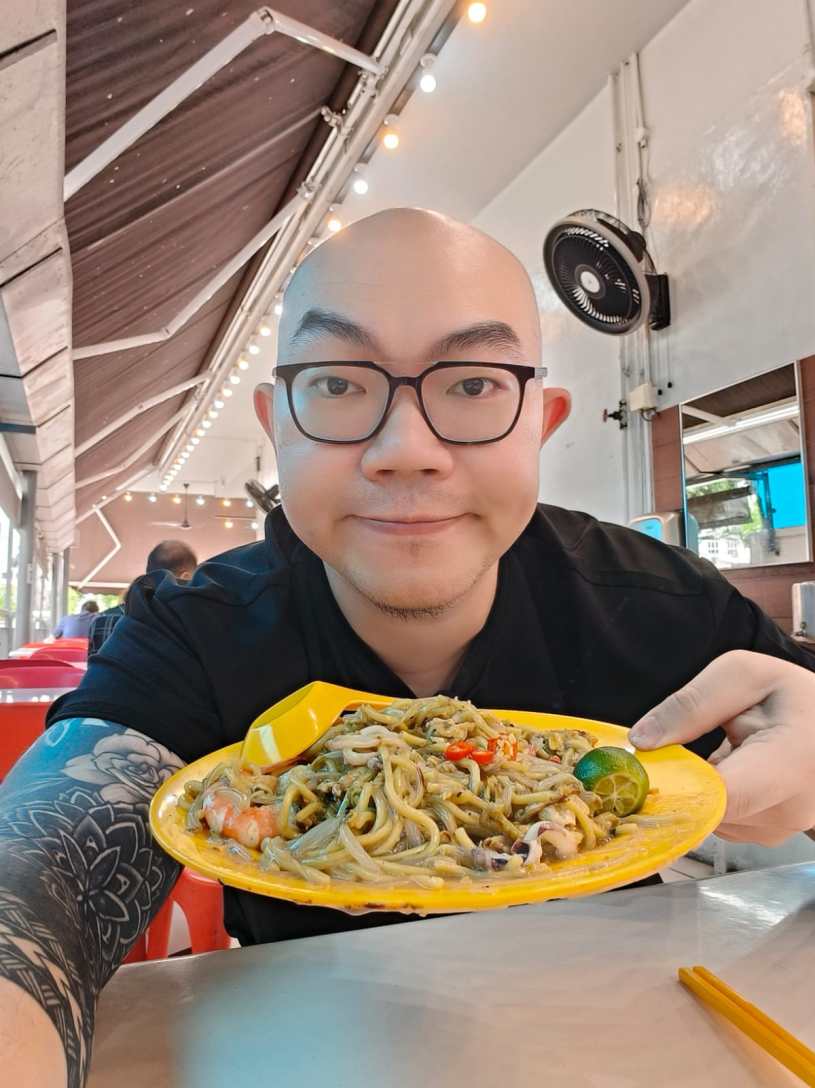
Meet Jazz, the passionate food reviewer behind Botak Jazz known for uncovering the best Hokkien mee in Singapore and sharing honest reviews with a loyal following.
Beyond the world of food, Jazz is also a successful entrepreneur, running a tattoo salon business. With a flair for creativity both on the plate and on the skin, Jazz seamlessly blends two unique passions, carving out a distinct niche in both industries. Hear his story on why he decided to go on a Hokkien mee hunt.
What inspired you to start your food review page on Facebook, and did you expect it to go viral?
I actually started as a blogger back in 2007, inspired by my cousins who were also blogging about various niches like Japan and cosmetics. At that time, forums were the main way to gain traction as social media platforms hadn’t taken off yet.
My first virality happened when I transitioned to writing food reviews, particularly on hawker food. Then, when Facebook gained popularity in 2009, it was a game changer. Every article I posted received thousands of shares, and my traffic skyrocketed. I eventually started creating videos, which further boosted my reach. It was an organic journey, but I never imagined it would go viral to this extent.
What sets your food reviews apart, and how do you connect with your audience?
Before TikTok and COVID, food content was very brand-driven and professional, often pushed by media companies. After COVID, the trend shifted towards personal, authentic content. That’s when I made my reviews more personal and relatable, connecting directly with the audience. I also focus heavily on hawker food, especially Hokkien mee, and I enjoy sharing the unique stories behind each dish. It’s this personal touch that resonates with my followers.
What has been your most surprising or memorable food discovery?
I’d say the stories behind the food intrigue me more than the food itself. Take Hokkien mee, for example—every stall has a distinct flavour and an unique backstory. Talking to the chefs and learning their inspirations and struggles gives the dish a deeper meaning for me. It’s these stories that make my food discoveries truly memorable.
How do you decide which restaurants or dishes to feature on your page?
It’s straightforward—I’m currently on a mission to review all the Hokkien mee stalls in Singapore. I started in the North, moved to the East, and am now exploring the Central and West regions. I use Google Maps to plan my visits and let the journey unfold naturally.
Have you faced any challenges or criticism as a food reviewer?
Definitely. In the past, I didn’t show my face, so criticisms felt less personal—they were directed at the content, not me. But now that I share my own opinions and experiences, personal attacks can sting. It’s something I’ve had to learn to deal with.
What role does social media play in influencing food choices today?
Social media is crucial. In the past, there was more demand than supply in the food scene, but now it’s the opposite. With so many options, social media helps businesses stand out and sway audiences. Platforms like Facebook and TikTok have become essential tools for influencing food trends and directing traffic to specific places.
My advice is to only pursue this if it’s something you would do even without external validation or monetary returns.
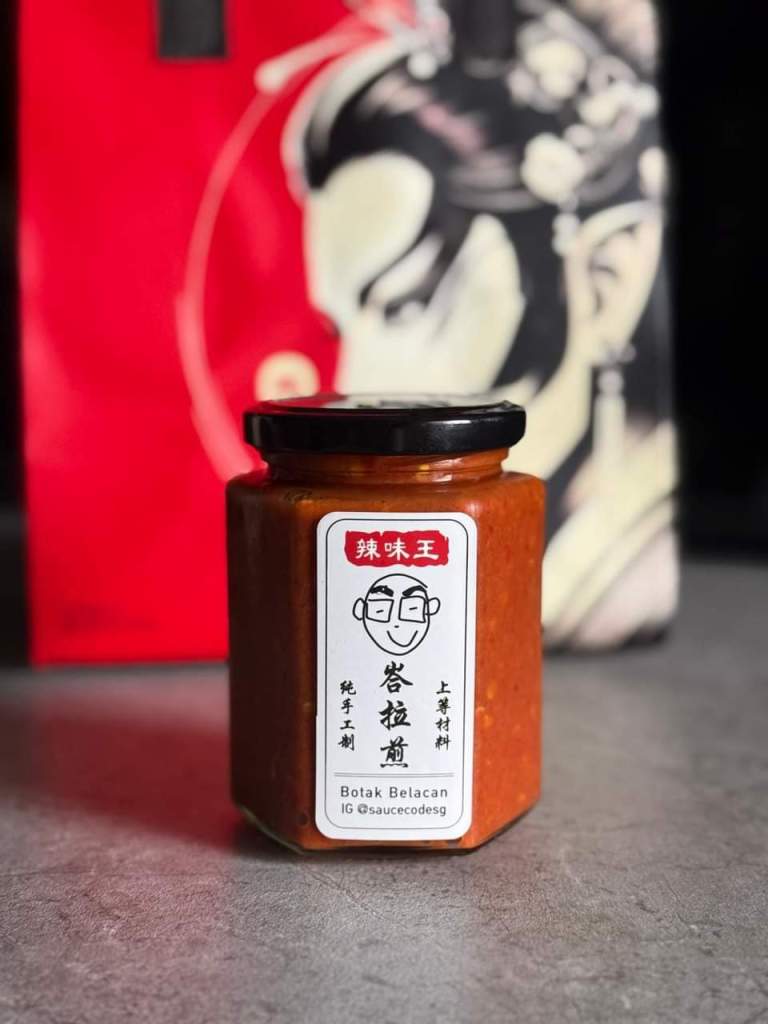
I also understand you started on a bottled belacan business. What inspired you to start selling bottled belacan, and how did you develop the recipe?
It started quite randomly while working with a sauce brand. After gaining traction on Facebook, I collaborated with the brand to create my own version of belacan.
Developing the recipe took about six months, evolving through multiple versions until it was just right. I wanted a belacan that was super thick, smoky, and full of prawn flavour.
How do you balance running your Facebook page with managing the belacan business?
The great thing is that I work with a seasoned sauce supplier who handles most of the operations. I oversee the flavour and ensure the product meets my vision, but they manage the manufacturing and logistics. I have more time to focus on my other business such as my tattoo services.
What sets your belacan apart from the rest, and how has the audience responded?
I’ve tried hundreds of belacan varieties, but none hit that perfect note. Mine stands out for its thick texture, intense smokiness, and rich prawn taste. The feedback so far has been overwhelmingly positive, which is very encouraging.
What challenges have you faced in starting and scaling this business, and how have you overcome them?
One major challenge is the high cost. I sell a large bottle for $15, which is almost double the price of other brands. To address this, I aim to lower costs through mass production in the future. For my social media reviews, staying consistent despite fluctuating traffic is also important; I focus on my passion for food and let the numbers take care of themselves.
Where do you see this business in the next five years?
I hope to scale the business by reducing production costs and reaching a wider audience. Expanding the product line is also on the horizon, but for now, my priority is perfecting the belacan and building a strong foundation.
What advice would you like to share with aspiring food critics or reviewers?
Consistency is key. Many people start a food blog or social media account and give up halfway. My advice is to only pursue this if it’s something you’d do even without external validation or monetary returns. Passion and perseverance will keep you going.
Be truthful and authentic. Eat what you love and, if you want to share it, let your personality shine through. Everyone’s unique perspective is what makes content special and potentially viral.
Connect with Jazz: Botak Jazz and ink.tattooists.
Read also: Meet Cherry Tan, Ex-SIA Air Stewardess Who Goes From Flying to Frying
